Why the "Semantic Integrity Framework for Disaster Imagery" Matters to Everyone

Semantic integrity + resilience architecture = economic stability
The Semantic Integrity Framework (SIF) is more than a tool for disaster contexts – it is a strategic architecture for the responsible use of AI. In a world where AI‑generated images and narratives increasingly influence decisions, the SIF establishes a human‑AI alliance built on roles, responsibility, and semantic depth. Long Covid and ME/CFS already affect several hundred million people worldwide — by 2033, more than 1 billion people are expected to be affected. If their cycles are not understood and legitimized, societies will lose enormous amounts of labor and creativity, and no economy will be able to cope with this.
I recommend combining the Semantic Integrity Framework (SIF) + the Moonlight Resilience Compass + the Geo-Resilience Compass (described here on this website) with AI work, as this will create real economic and social added value. Economic stability does not come from suppressing illness, but from the ability to semantically integrate cyclical stresses such as Long Covid – this is how resilience becomes a location factor, and for this we also need AI, scalability and speed.
Core Idea
AI is not a substitute for authority, but a sparring partner: a mirror, amplifier, and training ground for our own cognitive depth. Those who merely consume AI risk dependency and the erosion of their own abilities. Those who consciously embed AI into defined roles gain operational clarity and resilience.
The AI Roles in the Semantic Integrity Framework for Disaster Imagery
Why each of these roles is indispensable: Only when we consciously master these roles can we prevent AI‑driven processes from remaining trapped in blind automation. Instead, they transform into responsible, transparent, and semantically sustainable decisions that go beyond mere technicality. These roles mark the decisive difference between simple technical correctness and genuine institutional resilience and it is precisely through them that trust, orientation, and ethical depth are created, both in times of crisis and in everyday practice.
(Just a selection)
- Trust Boundary Sensor – identifies where trust ends and critical scrutiny must begin.
- Responsibility Reclaimer – ensures that responsibility remains with the human.
- Boundary Definition & Escalation Guard – prevents uncontrolled dynamics.
- Decision Decoupler – separates analysis from final decision‑making.
- Misinterpretation Monitor – protects against semantic distortions.
- Dependency Indicator – makes unhealthy attachments visible.
- Narrative Controller – safeguards control over meaning and interpretation.
- Critique Amplifier – cultivates the courage for friction and protects against semantic smoothing.
- Context Anchor – secures carriers of meaning and prevents semantic decoupling.
- Transparency Mediator – makes origins, roles, and boundaries visible and auditable.
- Post-Crisis Reviewer – establishes ethical reflection after crises and documents AI’s contributions and omissions.
These roles are universally transferable – from disaster management to industrial processes and compliance structures.
Added value beyond the disaster context
In all areas where technology, language, or law intersect, the Semantic Integrity Framework (SIF) prevents misinterpretations and creates a layer of integrity. It serves as a semantic “seal” for AI‑supported processes – from patents to compliance to industrial applications. Semantic distortions can endanger innovation, legal clarity, or safety. The SIF makes these risks controllable.
Human–AI Alliance with Roles
Relevance
- Human Machine Interfaces (HMI): Roles such as Trust Boundary Sensor or Misinterpretation Monitor are directly transferable to interfaces between humans and machines. They make HMI not only functional but also semantically secure.
- Risk & Compliance: Roles such as Responsibility Reclaimer or Decision Decoupler prevent AI‑supported decisions from becoming a black box.
- Innovation & Translation: Roles such as Narrative Controller ensure cultural connectivity and legal clarity in international cooperation.
Examples
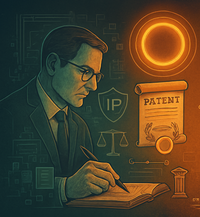
Semantic Integrity Framework – Relevance for AI‑Driven Patent Systems & IP Governance
A Patent Engineer & Technical Translator would operate at the intersection of technology, language, and law. His focus could, for example, be on intercultural and interlingual communication in highly complex technical fields. This would involve intellectual property, where precision, clarity, and protection against misinterpretations are crucial.
Required Integration of the Semantic Integrity Framework – Why?
- For patents and technical translations, semantic precision is essential. The Framework prevents misinterpretations and creates a “layer of integrity” that is indispensable even in AI‑supported translation or documentation.
- Especially in the IP field, semantic distortions can lead to legal disputes or loss of innovation.
- AI can accelerate processes, but only with semantic depth can they remain legally and culturally resilient. This is essential for IP rights and international standards.
- Resilience as a location factor: Semantic precision, cultural connectivity and cyclical resilience — these are precisely the building blocks that make technical translations, patents, and international IP collaborations stable and future-proof.
Why would an additional combination with the Moonlight Resilience Compass be useful?
Extended Integration of the Moonlight Resilience Compass
Even if the Patent Engineer & Technical Translator is not directly active in the health sector, the Compass would serve as an example of didactic architecture that translates complex content into universally understandable symbols. The model could show him how to make technical or legal content culturally accessible. Innovation processes are also cyclical (idea → testing → protection → application). The Compass shows how to legitimize and structure cycles — a way of thinking that is also valuable for patent work and international cooperation.
Why would the Geo‑Resilience Compass also be of decisive importance?
Integration of the Geo‑Resilience Compass
As a bridge‑builder between, for example, East and West or North and South, he needs tools that create global standards while remaining locally adaptable. The Geo‑Resilience Compass can demonstrate how to operationalize abstract axes (health, infrastructure, society) – a principle that also applies to international IP cooperation.
Added Value
- Cultural and linguistic connectivity: The approaches provide a methodology for making complex content understandable across language and cultural boundaries.
- Quality assurance: The Semantic Integrity Framework could serve as a “seal” for AI‑supported translations or technical documentation.
- Resilience in innovation processes: It demonstrates how uncertainty and complexity are not suppressed but structured – a principle that also applies to patent work.
Semantic Integrity Framework – Relevance for Narrative Media (AI Film & Storytelling)

Image description
Left: the fragmented, pixelated AI city – futuristic, yet incomplete and synthetic.
Right: the human hand shaping a coherent, vibrant city with clear architecture and cultural detail.
Center: the glowing bridge of concentric context rings – the Semantic Integrity Framework as a connection of transparency, responsibility, and context.
AI can generate, but only through human responsibility and the framework does a resilient, culturally resonant vision of the future emerge.
Example of an AI short film: “AI City Vision”
AI Film Production in 2025 – Without a Semantic Framework Let’s imagine a young team of creative AI designers produces a 5-minute AI-generated short film. They promote their AI short film as a pure AI experiment, supposedly launching a new wave of filmmaking, with the message: “No more expensive studios. No massive and costly crew teams. Just pure imagination and innovation.”
At first glance, this sounds visionary – but this is precisely where the core problem lies, and the comments on the film reflect that, even though the visuals are impressive and the technology advanced:
- The main points of criticism concern the lack of narrative depth, the storyline remains fragmented and hard to follow, poor dialogue, monotonous camera work, characters appear artificial and emotionally flat, cultural superficiality i.e., cultural symbols (e.g., futuristic masks, digital rituals) are misunderstood or seem arbitrary and a boring story.
And this is exactly where the Semantic Integrity Framework, with roles like Trust Boundary Sensor, Narrative Controller, and Transparency Mediator, would have intervened – to turn an AI demo into a narratively solid, culturally resonant film.
What did the filmmakers forget?
- Missing role logic: It was not made clear what responsibility the AI carries and where human intervention is needed. The impression was given that the entire film was produced solely by AI – without human correction, narrative control, or cultural contextualization.
- Transparency markers were missing: There was no indication of which scenes were AI-generated, which decisions were consciously made by the authors, and where the boundaries of AI lay. Viewers could not discern which elements were AI-generated and which were deliberately designed. Result: Viewers and commentators criticized exactly these points – lack of narrative depth, artificial characters, stereotypical elements.
- Narrative weakness: Without semantic control, the story remained fragmented and felt like a tech demo.
What would have been different – with the Semantic Integrity Framework for Narrative Media?
- With a Transparency Mediator, the authors could have clearly documented: origin of outputs, boundaries of AI, human responsibilities.
- A Context Anchor would have semantically embedded each scene, so it wouldn’t feel like a pure tech demo.
- As a result, the film would not have been marketed as “100% AI,” but as a Human–AI Alliance – a process that builds trust and systematically absorbs criticism.
Realism & Human Dimension
Applying role logic:
- Trust Boundary Sensor → would have monitored where AI characters appear too artificial and where human actors or more realistic avatars are needed.
- Misinterpretation Monitor → would have prevented visual elements (e.g., digital masks) from distorting the narrative message or slipping into “demo mode.”
Concrete implementation:
- More human characters, fewer purely synthetic settings.
- AI avatars with semantically verified movement patterns (gestures, facial expressions, posture).
Narrative Depth
Narrative Controller:
- Ensuring that every scene fulfills a semantic function (setup, conflict, resolution).
- Avoiding static shots through semantic escalation logic.
Decision Decoupler:
- Separation between AI-generated suggestions and final narrative decisions.
- AI provides variants, but the semantic role architecture filters what makes narrative sense.
Visual Integrity
Context Anchor:
- Each scene is semantically anchored in context (place, time, meaning).
- This creates coherence instead of “showcase fragments.”
Transparency Mediator:
- Documentation of which elements are AI-generated and which are deliberately human-designed.
- This builds trust with the audience and prevents the impression of a pure tech demo.
Resilient Implementation
Global resonance:
- The framework could have supported the creative team in ensuring that the AI production not only impresses technically but also remains culturally resonant.
- Example: Scenes are checked for semantic misunderstandings (e.g., symbolism of rituals, clothing, architecture).
Post-Crisis Reviewer:
- Reflection after completion: Where did AI help narratively, where did it weaken the story?
- This essential feedback loop makes the production truly learnable and resilient.
With the framework, the AI short film would not have been just an AI experiment, but a narratively solid, culturally resonant film:
- More realistic characters with human depth.
- Narratively coherent scenes instead of static demos.
- Transparent role logic that embeds AI as a partner, not as an uncontrolled black box.
- Global resonance through semantic control of symbols and narratives.

Semantic Integrity Framework – Relevance for HMI (human-machine interfaces)
Roles such as trust boundary sensor or misinterpretation monitor are directly transferable to interfaces between humans and machines. They make HMI not only functional, but also semantically secure. The framework provides a semantic depth layer that prevents AI outputs from being technically explainable but semantically distorted. The framework also shows how to operationalize meaning — not just probabilities, but narrative responsibility.
Why is this relevant?
With AI role architecture, explainable systems can be better secured didactically and epistemologically.
Why is the Moonlight Resilience Compass also relevant here in addition to the semantic framework? AI systems must not only process linear data, but also fluctuating, human-influenced conditions. It is crucial that AI not only works technically, but is also economically and socially compatible.
Resilience = location factor. AI + semantic depth not only ensure efficiency, but also trust and market acceptance.

Semantic Integrity Framework – Relevance for Industrial Processes
In the food and packaging industry, safety, precision, and traceability play a highly central role. The Framework can demonstrate how processes can also be semantically secured – essential for quality control, documentation, and regulatory requirements.
Misinterpretation Monitor & Trust Boundary Sensor: These roles are transferable to production processes: they prevent misunderstandings in AI‑supported analyses (e.g., material testing, process optimization).
Additional Integration of the Moonlight Resilience Compass
- Relevance for employee health & resilience: Cyclical burdens (shift work, exhaustion, Long Covid) are also an issue in industry. The Compass provides a structure to make these burdens visible and to ensure participation.
- The model could demonstrate how resilience architectures can be established in companies – not only for children, but also for workforces.
Integration of the Georesilience Compass
- Relevance for supply chains & sustainability: Many in this sector also operate globally. The Geo‑Resilience Compass shows how environment, health, infrastructure, and society can be systemically connected. For industry, this means resilience can be operationalized in supply chains and production networks.
Economic Added Value
- Economic stability through resilience: The combined approach makes clear: resilience is a location factor. For a manufacturing company, this means fewer disruptions, more stable supply chains, and greater acceptance among customers and regulators.
- AI provides scalability, and the Framework provides the semantic depth that prevents optimization from leading to blindness.

Semantic Integrity Framework – Relevance for Compliance & MiCAR
The MiCAR domain (Markets in Crypto‑Assets Regulation) requires transparency, traceability, and protection against misinterpretations. The Framework can provide an important layer of semantic assurance here, ensuring that data and reports are not only technically correct but also legally and narratively robust.
- Misinterpretation Monitor & Trust Boundary Sensor: These roles are directly transferable to compliance structures, as they prevent AI‑supported analyses from leading to false risk assessments or regulatory violations.
- Relevance for Risk Culture: Roles such as Responsibility Reclaimer or Decision Decoupler are crucial to ensure that AI‑supported decisions in the financial sector remain human‑anchored. This means AI does not become a “black box” risk but remains a sparring partner with clear boundaries of responsibility.
Additional Integration of the Moonlight Resilience Compass
- Relevance for employees & customers: The Compass demonstrates how cycles of stress and resilience can be made visible. For compliance and risk culture, this is equally transferable: financial markets and organizations also follow cyclical patterns (boom, crisis, stabilization).
- The model could help develop resilience architectures in the financial sector that do not rely solely on linear risk assumptions but instead legitimize cyclical dynamics.
Economic Added Value
- Resilience as a location factor: For FinTechs and Investment as a Service, trust is the strategic currency. My approach also shows that economic stability does not arise from suppressing risks but from their semantic integration.
- AI provides scalability, while the Framework delivers the integrity layer that is both regulatorily and economically indispensable.

Semantic Integrity Framework – Relevance for IT & Networks: Network Administration, System Repair, and Remote Support
In system administration and remote support, it is crucial that AI‑supported tools deliver not only technical diagnoses but also semantically clear and trustworthy information.
- Misinterpretation Monitor: Helps ensure that AI‑supported logs or analyses are not misread – a direct added value for troubleshooting and compliance.
- Less “trial & error,” more reliable decision‑making foundations (between technology, practice, and stability).
Human–AI Alliance with Roles
- Relevance for system stability: Roles such as Trust Boundary Sensor or Decision Decoupler are transferable to IT systems. They prevent AI‑supported automation from intervening uncontrollably. In this way, AI remains a sparring partner, not a risk.
Additional Integration of the Moonlight Resilience Compass
- Relevance for employee health & customer projects: Cyclical burdens (overload, burnout, project stress) also exist in IT. Here too, the Compass demonstrates how cycles can be made visible and legitimized – transferable to IT teams and customer communication.
- Important for resilience in service structures, ensuring that customers and employees are not overwhelmed.
Economic Added Value
- Resilience = location factor: Stability is also crucial for smaller companies in this field, since AI + semantic depth should not only deliver efficiency but also secure customer trust – becoming a direct competitive advantage.

Semantic Integrity Framework – Relevance for Data Protection & Compliance
Data protection thrives on clear meaning and transparency. The Framework prevents semantic distortions in AI-supported data analyses or images – a critical factor, especially when sensitive health data is being processed.
- It can serve as a quality seal for AI: because it is essential that AI outputs are not only technically correct but also legally and semantically robust.
Human–AI Alliance with Roles
- Relevance for Privacy Governance: Roles such as Trust Boundary Sensor or Misinterpretation Monitor are directly transferable to data protection processes. They help design AI-supported systems in a way that misuse, misinterpretations, and dependencies are identified and prevented early on.
- AI remains a tool that makes responsibility visible, rather than becoming a compliance risk.
Additional Integration of the Moonlight Resilience Compass
- Relevance for employee health & patient data: For a pharmaceutical company, this would be transferable to patient and employee resilience, and thus also to the handling of sensitive health data.
- The model could help anchor data protection not only technically, but also humanly and semantically.
Economic Added Value
- Resilience = location factor: Data protection is not just an obligation, but a genuine competitive advantage. AI + semantic depth can not only ensure compliance, but also build trust among patients, authorities, and markets – positioning data protection as a key strategic resource, not merely a regulatory requirement.
Semantic Integrity Framework – Relevance for Typographic Integrity & Cultural Compliance
Cultural typography demands more than technical rendering – it requires semantic depth, contextual transparency, and human responsibility. The Semantic Integrity Framework prevents misinterpretations and cultural distortions in AI-generated script – especially in sensitive fields like Arabic typography, where visual form carries historical, emotional, and linguistic weight.

This image shows what words often only suggest: the tension between synthetic generation and cultural responsibility. On the left, fragmented letters – technically produced, yet semantically empty. On the right, the human hand – shaping, connecting, deeply rooted in the cultural narrative. Between them lies the luminous bridge of context rings: it represents your Semantic Integrity Framework, which not only demands transparency, responsibility, and semantic depth, but structurally anchors them. Thus, a mere AI demo becomes an ethically sustainable process and typography becomes an expression of trust.
Semantic Anchoring as Compliance Layer
- The Framework acts as a semantic quality seal: AI outputs must not only be technically correct, but also culturally and ethically robust.
- It ensures that synthetic typefaces are not misread as authentic – protecting against semantic confusion and reputational risk.
Human–AI Alliance with Roles
Roles like Context Anchorer and Transparency Mediator become essential in typographic design:
- They clarify origin, boundaries, and responsibility.
- They prevent misuse, misinterpretation, and cultural overreach.
- AI remains a tool – never the author of meaning, but a visible part of a traceable process.
Example: Transparency Protocol for AI‑Generated Script in an Educational Project
Initial Situation: A university wants to use an Arabic script for a student recruitment campaign. The agency tests AI tools such as Nano Banana, which can quickly generate script images but do not master authentic calligraphy.
Problem: The AI delivers raster graphics without a vector base; the letters are often incorrectly connected, and the script appears inconsistent. Without context, the university might assume it is an “authentic” font – and use it in official materials.
Solution with the Semantic Integrity Framework – Role: Transparency Mediator - Every output is accompanied by a Transparency Protocol:
Origin:
- Generated with Nano Banana, Version X.X
- Date/Time documented
- Process: AI‑generated raster output
Boundaries:
- AI can synthesize letterforms and suggest moods.
- AI cannot: correctly apply rules of Arabic calligraphy, generate consistent font families, or deliver print‑ready vectors.
Responsibilities:
- AI provides draft outputs.
- Designer reviews, corrects, contextualizes.
- Final responsibility lies with the human.
Context Markers:
- Annotation: “Mood: academic, Context: university campaign”
- Metadata: “AI‑assisted modification, humanly curated”
- Visible label: “AI‑generated draft”
Governance Anchoring:
- SOP: “Every AI‑generated script must be delivered with a Transparency Protocol.”
- Mandatory markers: origin, boundaries, responsibilities.
- Institutional standards: transparency is not optional, but mandatory.
Strategic Impact:
- For designers: Criticism is made systematically visible.
- For clients (university): Clarity about what AI has produced and where human responsibility begins.
- For institutions: Transparency is documented, auditable, and trainable – trust is established.
Why is this so important?
1. Protection against semantic deception
- AI can quickly generate script images, but without context they appear like “real fonts.”
- The risk: institutions or clients may adopt synthetic outputs unchecked and potentially lose cultural integrity.
- The Framework (its AI‑role approach / Human–AI alliance) prevents this deception by making origin and boundaries visible.
2. Responsibility remains with humans
- AI is a tool, not an author of meaning.
- The protocol clearly documents: the machine provides drafts, the human anchors them semantically and culturally.
- Thus, responsibility remains traceable and auditable.
3. Trust as a strategic factor
- Transparency builds trust among clients, institutions, and the public.
- Those who know where AI ends and human responsibility begins feel secure.
- This trust is not only cultural, but also an economic competitive advantage.
4. Compliance & Governance
- In sensitive fields such as education, health, or administration, transparency is mandatory.
- The Framework makes it trainable, documentable, and verifiable – a genuine compliance layer.
- This ensures AI does not become a risk, but a visible part of a responsible process.
5. Cultural depth instead of technical surface
- Especially in Arabic typography, every line carries historical and emotional meaning.
- The Framework helps protect this depth by separating synthetic surfaces from genuine cultural substance.
- Typography thus remains an expression of identity and dignity – not merely a technical demo.
The Transparency Protocol (see above) transforms AI outputs from “dangerously misleading” into “ethically sustainable.” It reveals what would otherwise remain hidden and builds the bridge between technology, culture and trust.